

Hegemonya
Designing an economy. Building systems for competition.
The development of interconnected game mechanics, from production and trade to resource management and territorial conflict.
Project Overview
Hegemonya is an online strategy game that connects economic growth with player competition. Players earn starting capital from small jobs, establish businesses, expand their production network, and invest their income in character progression. The development scope brings this economic loop together with individual and territorial conflict in the same game world.
Hegemonya game pageEconomy and Production Systems
Business management turns starting capital into recurring sources of income. Factories and farms expand the production network, while goods and inventory systems show players what that network produces.
- Businesses and production
- Goods and inventory
- Market and trade
- Progression and competition
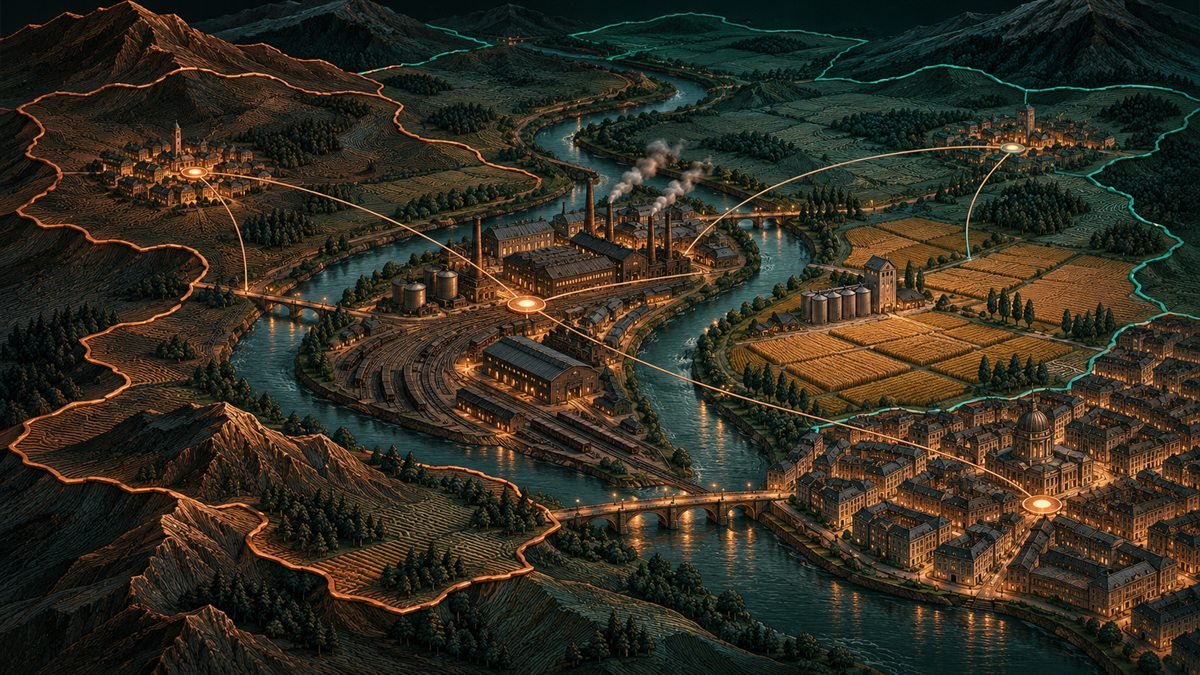
A conceptual diagram of how the systems connect.
- Factories and production levels
- Production levels connect factory progression to the economy loop. The resources a player commits to production and the growth of the business are part of the same decision.
- Farms
- Farms provide the agricultural part of the production network alongside factories. As businesses grow, players manage a broader range of production sources.
- Goods and inventory
- Inventory tracks the goods players produce. The quantity on hand informs their trading decisions.
Competition and Combat Systems
Economic resources support character levels, equipment, and power progression. Production decisions therefore influence how players prepare for competition.
- Boss encounters and duels
- Boss encounters put character progression to the test against an encounter objective. Duels give players a way to compete directly.
- Territory wars
- Territory wars give players an additional objective through area control. Competition revolves around both character strength and territory in the game world.
Player Interaction
- Market and trade
- The market gives players a shared space to trade the goods they produce. One player’s production decisions therefore shape what others can buy.
- Clans and rankings
- Clans bring group dynamics to competition. Player rankings let individuals compare their performance with others.
Technical Development Approach
A production or trade action can affect several systems. In a sale, for example, the item quantity, ownership, and payment need to agree on a single outcome.
- Data consistency
- Production output should appear in inventory in the correct quantity. When simultaneous requests target the same goods, stock, ownership, and payment changes must stay consistent.
- Business rules
- Production requirements, trade eligibility, and combat participation need explicit rules. Rejected actions should leave the related game state intact.
- Maintainable development
- Changes to production levels or competition rules need traceable effects across systems. Clear system boundaries make it easier to assess how a balance change affects inventory and progression.
Development and Testing
The studio portfolio lists Hegemonya as in development. The current testing phase and public release date have no public confirmation.
- Development scope
- The existing project summary documents the loop from small jobs to business ownership, then from production to character progression and player competition.
- Testing scope
- Priority scenarios for end-to-end validation include transferring production output to inventory, concurrent market transactions, and applying competitive results to player state.
Related Services
Explore Zoppie Games’ development services for projects with interconnected economies and multiplayer systems.